
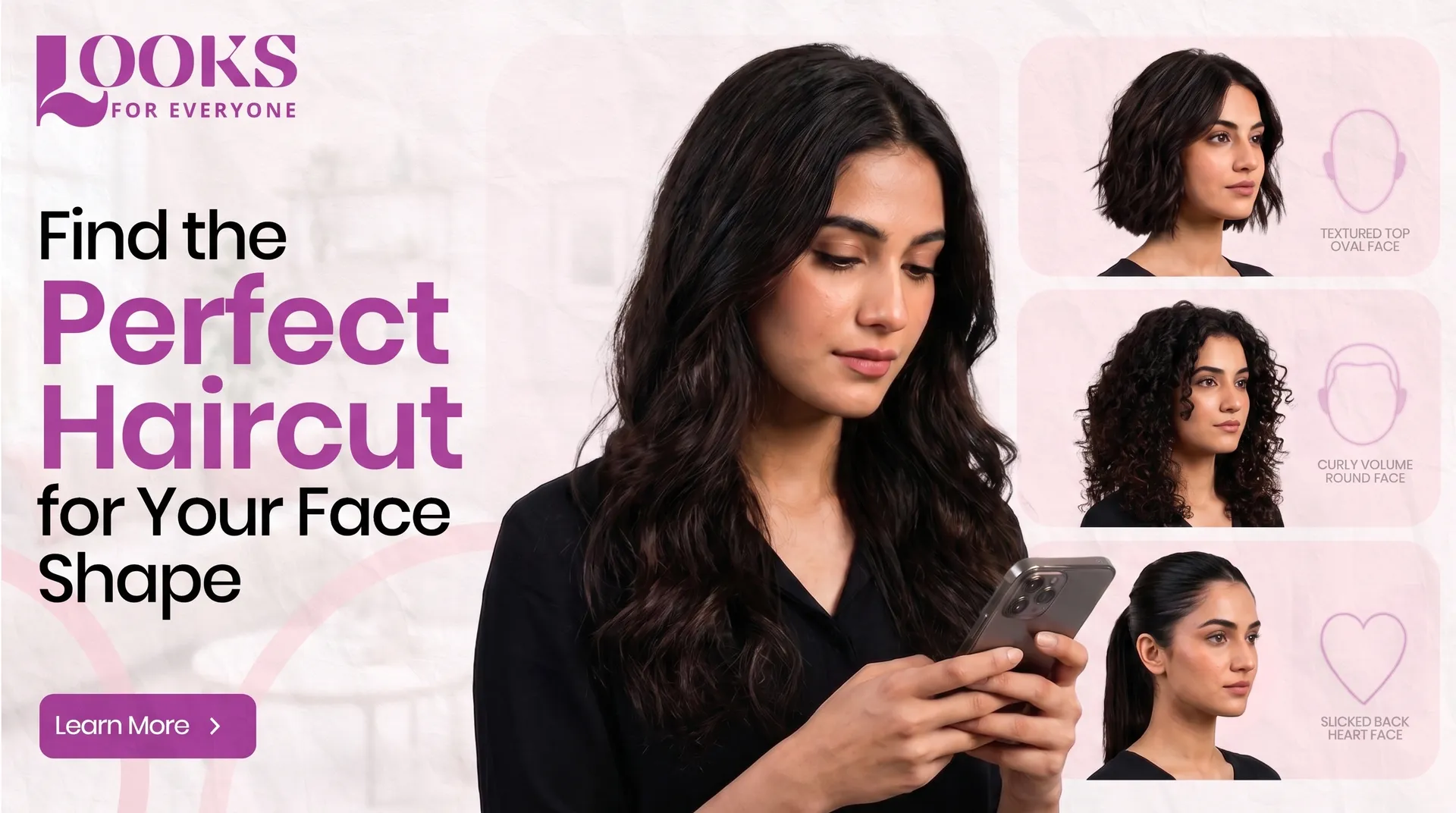
Find the Perfect Haircut for Your Face Shape
Introduction
Have you ever walked out of a hair salon with a haircut that looked breathtaking on a celebrity or magazine model, only to feel disappointed when looking in your own mirror? This common beauty frustration rarely comes down to the skill of your stylist or the texture of your hair. Instead, it usually happens because of a fundamental mismatch between the cut and your facial bone structure.
A truly great haircut does not exist in isolation. It works in harmony with your natural proportions, highlighting your best features, softening sharp angles, and balancing visual width and length. Choosing the right style begins with understanding your unique facial geometry. Whether your face is round, oval, square, heart, diamond, or oblong, learning how to choose a haircut for your face transforms styling from a guessing game into a predictable science.
In this comprehensive face shape hairstyle guide, we will break down the geometry behind personalized hair design. You will learn how to identify your facial silhouette accurately, explore the most flattering cuts for every profile, and explore how to communicate your vision clearly during your next salon visit.
How to Accurately Identify Your Face Shape
The Four Key Facial Proportions
Before exploring hairstyles for different face shapes, you must first determine your exact facial proportions. Many people assume their face shape based on casual observation, but subtle structural differences can completely change which haircut will be most flattering.
To accurately evaluate your structure, focus on four key areas:
Forehead Width: Measure across the widest part of your forehead, roughly halfway between your eyebrows and your hairline.
Cheekbone Width: Measure across your face from the peak of one cheekbone to the peak of the other, just below the outer corners of your eyes.
Jawline Width: Measure from the base of your jaw beneath your ear to the middle point of your chin, then multiply that number by two.
Face Length: Measure straight down the center of your face from the exact middle of your hairline to the tip of your chin.
Step-by-Step Face Shape Measurement Technique
You do not need specialized equipment to complete a face shape analysis for haircut planning. A flexible tape measure or a simple mirror test will give you a clear answer.
Pull your hair completely away from your face and tie it back in a secure ponytail or wrap it in a towel. Look directly into a well-lit mirror while keeping your head level. Using a washable dry-erase marker or lip liner, trace the exact outline of your face directly onto the mirror glass, ignoring the ears and focusing purely on the perimeter of your hairline, temples, cheekbones, and jaw.
Step back and review the traced shape on the glass. Compare your proportions against the standard geometric profiles:
The Oval Face Shape: The Balanced Canvas
Flattering Haircuts for Oval Face Profiles
The oval face shape is widely considered the most versatile silhouette in hair design because of its natural symmetry and balanced proportions. The cheekbones are slightly wider than the forehead and jawline, and the face tapers gently toward a softly rounded chin without sharp corners.
Because of this balanced foundation, almost any haircut for oval face structures will look harmonious. Those with an oval shape can wear short pixies, blunt bobs, shoulder-length shags, and flowing waist-length layers with equal ease.
Top Styles for Oval Faces:
Classic Long Layers: Adds natural movement while preserving facial balance.
Textured Blunt Bob: Frames the jawline cleanly without overwhelming facial features.
Curtain Fringe with Waves: Draws gentle attention to high cheekbones.
Slicked-Back Taper or Fade: Highlights balanced bone structure.
If you are looking for the perfect hairstyle for oval face profiles, consider a shoulder-grazing textured lob (long bob) paired with subtle face-framing layers. This cut frames the neck and collarbone while showcasing the natural balance of your cheekbones and jaw.
Styling Traps to Avoid with an Oval Profile
While versatility is a major advantage, there are still styling traps to avoid. Heavy, blunt straight-across bangs that cover the entire forehead can visually cut off the top third of your face, making an oval profile appear unnaturally shortened or round.
Similarly, excessive volume piled directly on top of the crown without balanced side width can stretch your face vertically, turning an otherwise balanced oval into an elongated oblong silhouette. Focus on styles that work with your natural proportions rather than fighting them.
The Round Face Shape: Creating Angles and Elongation
Haircuts That Slim a Round Face Naturally
A round face shape features soft curves, full cheeks, and a rounded chin, with the width across the cheekbones roughly equal to the overall vertical length. The jawline lacks sharp, defined corners. The primary goal when choosing a haircut for round face structures is to create the illusion of vertical length while introducing structure and slimming angles.

The most effective haircuts that slim a round face incorporate vertical volume, asymmetrical angles, and diagonal lines:
Long Layered Cuts: Layers that begin below the chin draw the eye downward, visually lengthening the neck and facial profile.
Asymmetrical Angled Bob: A cut that is shorter in the back and angles sharply downward past the chin breaks up the circular symmetry of the face.
Side-Swept Bangs: Diagonal bangs create an angular line across the forehead, breaking up facial roundness.
Textured Pixie with Crown Height: Keeping the sides close-cropped while styling the top with textured height adds vertical length.
Textures and Styles That Add Vertical Balance
When looking for the best hairstyle for round face shapes, avoid cuts that end precisely at cheekbone level, such as classic chin-length rounded bobs. These cuts add horizontal bulk to the widest part of your face, exaggerating roundness.
Instead, opt for medium-to-long cuts with piecey, textured ends and off-center or deep side parts. Waves should remain loose and start below the jawline rather than curling outward at the cheeks. For men, high fades paired with textured pompadours or quiffs provide the vertical lift and sharp angles needed to complement a softer jaw.
The Square Face Shape: Softening Strong Architectural Lines
Hairstyles That Soften a Square Face
A square face shape is defined by a strong, angular jawline, straight sides, and a broad forehead, with the width of the forehead, cheekbones, and jaw being virtually identical. This architectural structure gives individuals a striking presence, but the wrong haircut can make the jawline appear overly severe or boxy.

The key objective when designing a haircut for square face types is to soften prominent angles and draw attention upward toward the eyes and cheekbones:
Soft, Layered Shags: Choppy, feathered layers around the perimeter diffuse the sharp corners of the jaw.
Shoulder-Length Lob with Waves: A collarbone-skimming cut with loose, fluid waves softens facial lines.
Side-Swept Fringe: Soft, sweeping bangs hide the angular corners of a broad forehead and establish a diagonal visual flow.
Textured Side-Part Fade (for Men): A side part with soft texture on top diverts attention from jaw symmetry.
Strategic Layering Around the Jawline
When reviewing hairstyles that soften a square face, avoid blunt, jaw-length cuts and wide, heavy straight-across fringe. A blunt bob that lands exactly at the jawline acts like a horizontal arrow pointing directly to the widest, sharpest part of the face, making the overall structure appear wider.
Instead, ask your stylist for soft, feathered ends and graduated layers that fall either slightly above or well below the jaw. Soft waves or loose curls introduce fluid, circular motion that balances the strong, straight lines of your bone structure.
The Heart Face Shape: Balancing Forehead Width and Narrow Jawlines
Flattering Cuts for Heart-Shaped Faces
A heart-shaped face is widest across the forehead and temples, with high cheekbones that taper down into a delicate, pointed chin. Many individuals with this shape also feature a distinct widow's peak hairline. The primary styling goal when planning a haircut for heart-shaped face profiles is to reduce the visual width of the forehead while adding fullness around the narrow jawline.

Flattering cuts for heart-shaped faces focus on building weight and movement around the lower half of the face:
Chin-Length Textured Bob: A classic bob ending right at the chin fills in the empty visual space around a delicate jaw.
Curtain Bangs with Long Waves: Middle-parted curtain fringe sweeps outward, narrowing the forehead while drawing focus to the eyes.
Collarbone Shag with Flippy Ends: Outward-curling layers around the neck build visual width at the base of the face.
Side-Swept Textured Crop (for Men): Soft fringe styled across the forehead balances temple width.
Chin-Length Volumes and Fringe Adjustments
When selecting the best hairstyle for heart face types, avoid slicked-back styles with heavy volume at the crown and temples, as these exaggerate a wide forehead. Similarly, extremely short, blunt pixies that leave the chin area bare can make the lower half of the face look overly pointed.
Instead, incorporate soft wispy fringe, bottleneck bangs, or side-parted layers that cascade past the shoulders with volume concentrated from the chin downward. This placement creates balanced width where your face is naturally narrowest.
The Diamond Face Shape: Highlighting Cheekbones and Softening Corners
Best Hairstyle for Diamond Face Geometries
The diamond face shape is a striking profile characterized by narrow forehead and jawline measurements, with dramatic width centered at high, prominent cheekbones. The chin is pointed, and the overall silhouette is angular and structured.
The styling goal for a haircut for diamond face profiles is to showcase those enviable cheekbones while adding subtle width at both the forehead and the jawline to create an oval illusion.
Top Haircuts for Diamond Faces:
Deep Side-Parted Lob: Balances prominent cheek width with asymmetric framing.
Chin-Length Textured French Bob: Adds instant fullness around a narrow jawline.
Wispy Curtain Bangs: Opens up a narrow forehead and highlights the eyes.
Medium Layered Shag: Softens angular facial perimeters with textured movement.
Creating Width at the Forehead and Chin
The best hairstyle for diamond face shapes avoids center-parted, flat, pin-straight styles that fall close to the cheeks. Flat hair tucking behind the ears exaggerates cheekbone width while making the forehead and chin appear narrower by comparison.
Instead, embrace textured bobs, side-swept bangs, and voluminous waves that kick outward around the collarbone. Adding soft volume at the temples and around the jawline balances high cheekbones, giving your features a soft, elegant frame.
The Oblong Face Shape: Adding Width and Managing Visual Length
Haircuts for a Long Narrow Face
An oblong (or rectangular) face shape is noticeably longer than it is wide, with fairly consistent width across the forehead, cheeks, and jawline. The cheeks may appear slender, and the jawline often features a gentle or squared curve. The objective when choosing a haircut for oblong face profiles is to shorten the visual vertical length and add horizontal width through the sides.

Strategic haircuts for a long narrow face include:
Full, Blunt Bangs: Straight-across brow-grazing bangs conceal forehead length, instantly shortening the overall face.
Voluminous Mid-Length Waves: Waves and curls that flare outward at the cheeks create horizontal width.
Layered Bobs with Side Volume: Bobs that land between the chin and shoulders with layered side volume break up vertical lines.
Classic Side-Parted Crew Cut (for Men): Keeping the top shorter while maintaining clean, balanced sides prevents vertical stretching.
Side Volume, Waves, and Horizontal Framing
Avoid ultra-long, pin-straight hair with no layers, as well as extreme vertical pompadours or high topknots. These styles draw the eye continuously upward and downward, making an oblong face appear even narrower and longer.
Instead, focus on horizontal framing. Mid-length layered haircuts that incorporate voluminous blowouts, beach waves, and curtain fringe create width across the cheeks and temples, transforming an elongated profile into a balanced look.
Hair Length by Face Shape: Short, Medium, and Long Hair Options
Every face shape can pull off short, medium, or long hair, provided the structural cut and internal weight distribution are customized correctly.

Pixie Cut for Face Shape Variations
A pixie cut for face shape tailoring depends on where you place texture and length:
Round Faces: Choose a pixie with tapered, close-cropped sides and dramatic textured height at the crown.
Square Faces: Opt for a soft, wispy pixie with feathered fringe and softened sideburns.
Heart Faces: Try a side-parted pixie with long, sweeping bangs that skim the eyebrow line.
Oval Faces: Wear any crop, from an ultra-short buzz to a textured French gamine pixie.
Finding the Right Bob Haircut for Face Type
The bob is one of the most enduring haircuts in history, but its length must match your jawline:
Round Face: Choose an angled lob that hits two inches below the chin to elongate the neck.
Square Face: Select a textured, layered lob that falls at the collarbone to soften the jaw.
Heart Face: Pick a blunt, chin-length French bob to create width at the jawline.
Diamond Face: Choose a chin-skimming bob with flipped-out textured ends.
Long Layered Cuts for Visual Flow
If you prefer long hair for my face shape considerations, layers are essential to prevent the hair from dragging your features downward. A layered haircut for face shape customization removes excess weight, introduces movement, and directs focus toward your best facial features. Keep shorter face-framing pieces aligned with your cheekbones or jawline depending on whether you want to accentuate or soften those areas.
Bangs, Parts, and Layers: Fine-Tuning Your Custom Silhouette
Selecting Bangs for Different Face Shapes
Bangs are the most powerful structural tool a hairstylist has to alter perceived facial proportions without changing overall hair length.
Side Part vs. Middle Part Dynamics
Where you part your hair dramatically influences facial symmetry:
Middle Part: Highlights clean facial symmetry. It is ideal for oval, heart, and diamond profiles, but can emphasize jaw width on square faces or roundness on circular profiles if worn flat.
Side Part: Breaks up symmetrical lines and adds instant diagonal balance. It is ideal for round, square, and oblong faces seeking softer angles.
Deep Side Part: Generates dramatic crown volume and diagonal movement, drawing the eye away from prominent jawlines or full cheeks.
Men vs. Women: Face Shape Styling Across Genders
Men's Haircut for Face Shape Guidelines
Facial hair adds an extra dimension when tailoring a men's haircut for face shape balance. A beard functions much like bangs or contouring, allowing men to reshape their jawline and chin proportions.
Men's Face Balancing Strategy:
Round Face: High skin fade + textured quiff + angular, trimmed goatee (adds length).
Square Face: Classic taper fade + clean side part + light stubble (enhances jawline).
Heart Face: Medium textured crop + full rounded beard (builds chin width).
Oblong Face: Low fade + scissor-cut side part + avoid long chin beards (shortens face).
For men, maintaining balance is about managing the ratio between side fade height, crown volume, and beard length.
Women's Haircut for Face Shape Variations
For women, styling choices often involve balancing hair density, movement, and perimeter lines. A women's haircut for face shape design integrates blowouts, dimensional highlights, and parting strategies alongside the foundational haircut.
For example, balayage highlights placed around the cheekbones can widen a narrow face, while darker root shadows and vertical highlights can visually slim a rounder profile.
The Value of Virtual Tools and In-Person Consultations
Using a Virtual Hairstyle Try On and AI Tools
Modern technology has made exploring hairstyles much easier. Utilizing a virtual hairstyle try-on app, an AI hairstyle for face shape generator, or a face shape haircut simulator lets you test different lengths, fringe options, and colors before sitting in the styling chair.
These digital tools use facial mapping algorithms to outline your geometry and project realistic hair overlays onto your uploaded photo. While a face shape hair calculator provides a helpful preview, remember that algorithms cannot evaluate your hair's unique density, cowlicks, elasticity, or texture. Treat virtual try-ons as an inspiring starting point for a conversation with a professional stylist.

Booking a Haircut Consultation Near Me at Premier Salons
Nothing replaces the expertise of a seasoned stylist. If you are searching for a professional haircut consultation near me, look for reputable salons with experienced professionals who prioritize diagnostic consultations.
For clients searching for top-tier haircut salons in Lahore or other major fashion hubs, premier beauty venues like LOOKS provide tailored styling consultations. A professional stylist will assess your face shape, evaluate your hair texture, factor in your daily styling routine, and craft a personalized haircut recommendation designed specifically for you.
8. Conclusion
Finding the perfect hair for your face shape is one of the most empowering beauty steps you can take. Your face shape is not a limitation; it is a unique structural blueprint that helps you choose styles that accentuate your natural beauty. When you align your hair length, layering, and parting with your facial geometry, every day becomes a great hair day.
Instead of chasing generic, one-size-fits-all beauty trends, focus on styles that work with your unique features. Whether you choose to experiment with a virtual hairstyle finder or visit a master stylist for an in-depth consultation, understanding your face shape ensures that every cut enhances your natural features and boosts your confidence.
The next time you are ready for a style upgrade, use this guide as your personal roadmap, schedule a professional consultation, and step into a tailored look that reflects your best self.
FAQs
Common questions about this update.
Long layered cuts, textured asymmetrical lobs, and pixies with vertical crown height are ideal for round faces. These styles introduce angular lines and vertical lift that visually slim the cheeks and elongate your facial silhouette.
Pull your hair back, look straight into a mirror, and trace the outline of your hairline, temples, cheekbones, and jaw onto the glass with a washable marker. Measure your forehead, cheekbones, jawline, and vertical face length to identify which geometric category your proportions match.
Yes, but the style of bangs must be customized to your bone structure. Round and square faces benefit from soft, diagonal side-swept or curtain bangs. Oblong faces look best with full blunt fringe, and heart-shaped faces shine with wispy bottleneck bangs.
The oval face shape is traditionally considered the most versatile because its natural symmetry accommodates almost any hair length, texture, or style without requiring structural balancing.
A beard acts as a contouring tool for men. It can add square angles to a round jawline, build width onto a narrow, pointed chin, or soften a sharp, square jaw depending on how the edges and length are trimmed.
Yes. Strategic layering, parting, fringe, and volume placement can highlight your best features while softening wider or more angular areas, creating the visual impression of balanced, harmonious proportions.
Comments
Share your thoughts or reply to others.
Loading comments…